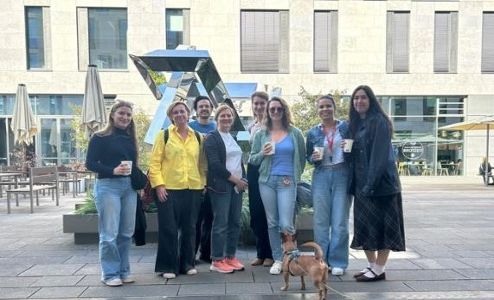
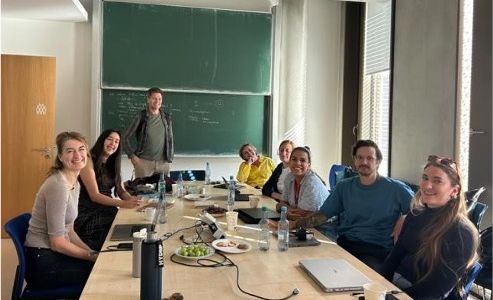
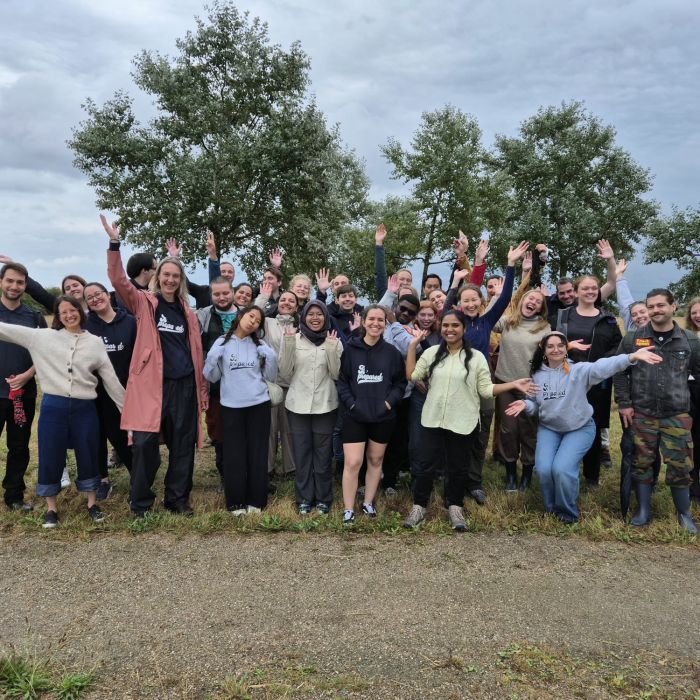
The Working group 1 (WG1) workshop on Nature-Based Solutions (NBS) and socio-behavioural interventions took place on 22-23 September 2026 at Heidelberg University’s Mathematikon in Heidelberg, Germany, in a hybrid format. The workshop supported the research coordination and capacity-building objectives of COST Action CA23133 (LILY) by bringing together interdisciplinary perspectives on the connections between human health, ecosystem health and planetary health.
The main objective was to explore opportunities for integrating nature-based solutions with socio-behavioural interventions to address health risks within a Planetary Health framework.
Discussions focused on how ecological processes, Earth system dynamics, planetary boundariesand social-ecological interactions can be considered jointly when designing interventions that benefit human, animal and ecosystem health.
A key focus was the development of a conceptual framework and criteria for identifying and assessing integrated interventions. The discussions highlighted the importance of considering the interconnectedness of human and ecosystem health and of bringing together knowledge from ecology, public health, social sciences and intervention research.
Combining nature-based approaches with interventions that address human behaviour and social contexts offers opportunities to develop more holistic responses to complex health challenges.
The workshop provided a platform for interdisciplinary exchange and research coordination within LILY. It helped establish a foundation for further collaboration on the conceptualisation, implementation and evaluation of integrated nature-based and socio-behavioural interventions.
The discussions also identified potential areas for future joint work, including refining intervention frameworks, developing common evaluation indicators and preparing collaborative research initiatives.
Next steps include continuing the development of a shared intervention framework, identifying suitable indicators to assess health and environmental outcomes, and exploring opportunities for collaborative research and capacity-building activities across relevant disciplines. These efforts aim to strengthen the evidence base for interventions that address health risks while supporting ecosystem health and wider Planetary Health objectives.
The workshop marked a further step towards fostering interdisciplinary collaboration within LILY and advancing integrated approaches to the interconnected challenges of human, animal and environmental health.
Participants: Treskova, Marina; Rocklöv, Joacim; Madriz Montero, Andres; Macintyre, Tadhg; Kooiman, Frederike; Kachnova, Uliana; Harris, Vanessa; Danzinger Díaz, Camila; Carrillo, Angelica; Blesic, Suzana